Bodily Offerings
Bodily Offerings
INTERVIEW WITH LUVA
Could you tell us a little bit about yourself?
I grew up in art studios and galleries in Bermondsey in South London so my art education was gleaned first-hand. I watched artists at work and at play, I saw them fail and succeed. Richard Wilson was around so I saw the difference success makes to an artist early on. Lots of those artists inspired me, most of them you won’t have heard of, like Alex Rodgers. He scrawled onto walls and taught me that words are magic spells.
What’s changed for you over the past year?
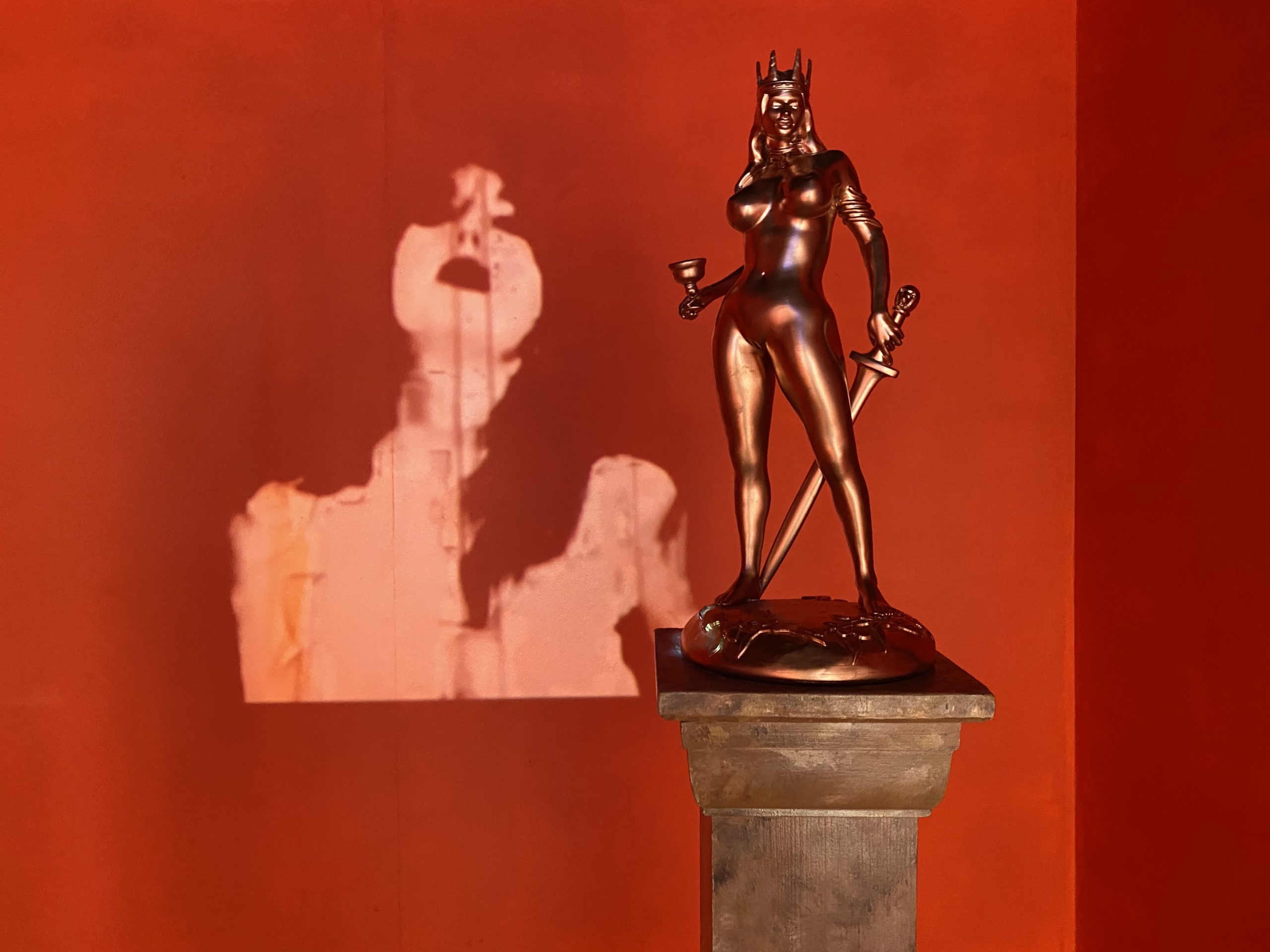
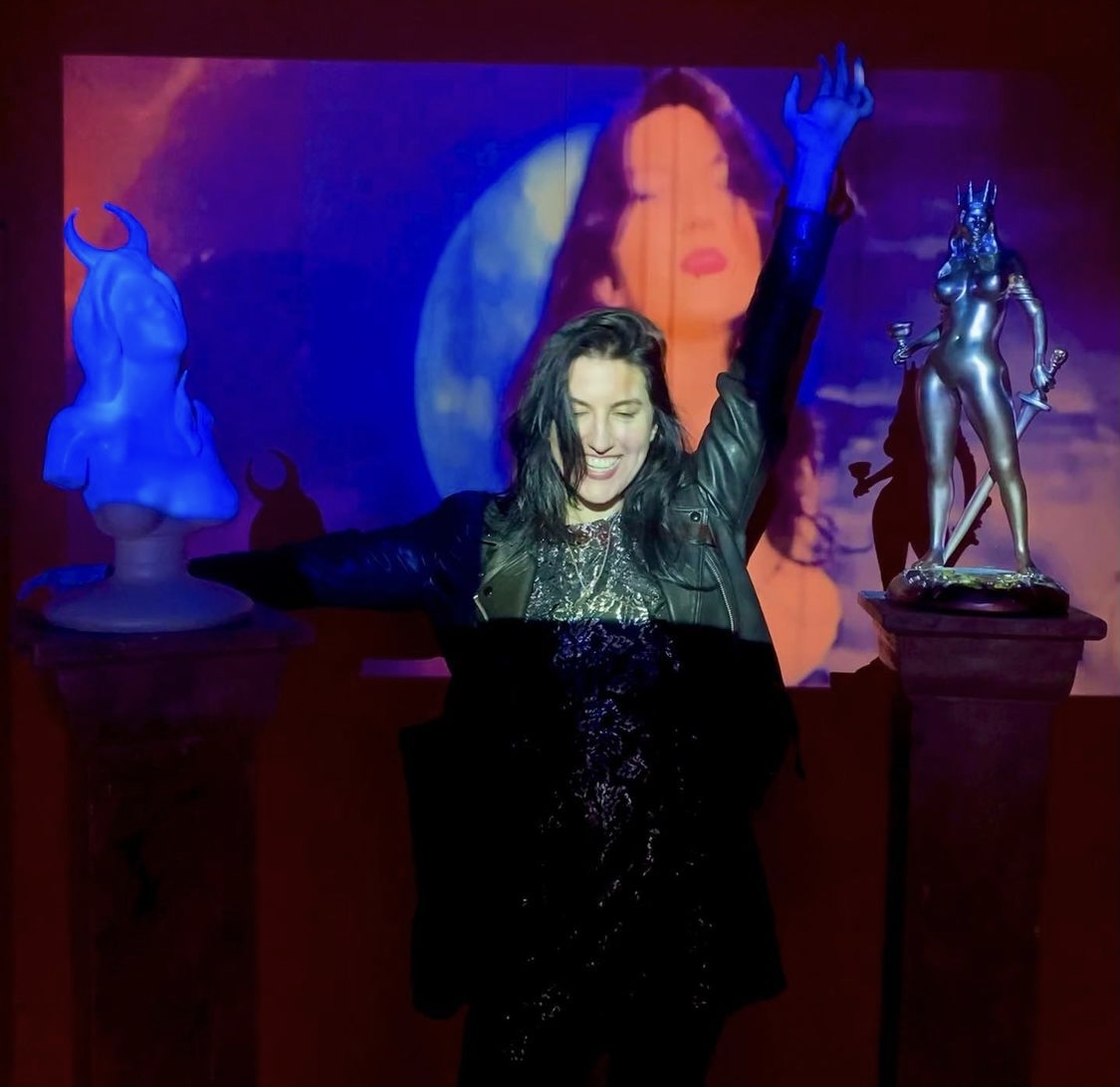
Lots. I experienced a profound loss which prompted a relocation from South West to North by North West. My art’s changed beyond recognition over the last year. I’ve moved on from my large scale 2D drawings and incorporated new technologies like 3D printing in order to create my new pieces. I let go of what I’d established and embraced a new way of working. It was the right move. I’m excited about what I’m creating again.
What attracts you to the history of Inanna and city of Babylon?
The Jungian reading of proto epic poem ‘The Descent of Inanna’ hooked me. The poem articulates the personal shadow, the parts of ourselves that we repress and project onto others. It speaks of the hero’s journey and the magic that is mined in the darkest of places. Inanna articulates an aspect of the feminine societal shadow – the unmanageable depths of the psyche which cannot be disciplined, ordered or contained. My work embraces the personal and societal shadow because, now more than ever before, what is hidden must be seen.
How do myths and folklore play a role in your practice?
Myths and folklore offer a glimpse into the psyche that cannot be accessed through purely rational realms.
The stories we tell ourselves define us, they influence our reality. Stories are part of our DNA. Even half-forgotten dreams offer fleeting narratives. Growing up I didn’t have a clear sense of my own story. I searched for a narrative that explained the beauty and the beastly nature of existence. The stories that resonated with me, were Marion Woodman’s Leaving My Father’s House and Joseph Campbell’s reading of The Hero’s Journey. Both writers map out an exploration into ourselves, prompted by the desire to go to the edge of human experience and beyond. It strikes me that the artist’s life encapsulates the hero’s journey on a daily basis. Every day, the artist goes out into the unknown and faces a blank piece of paper and returns with something new, somehow changed by the experience.
Your paintings and videos often include great contrasts between the deep blacks and bright whites. How does light and dark affect the compositions and concepts of your videos and prints?
I’m self-taught, I reduced my palette to Indian ink on white paper as a way to learn composition. I spent time in Lipari as a kid and was very aware of the Italian masters like Caravaggio and the dark gothic of the catholic church, I was obsessed with gory religious relics and the white light spirit of the saints. Caravaggio’s chiaroscuro hit me deep. Painters like Velasquez are painting themselves out of the dark. I can relate.
There is a motif of commerce and a trading of thrills within your practice. What draws you to this hedonism that at once seems billboard shiny but is, at the same time, violent?
We live in a society that uses fear and desire as primary motivating factors.
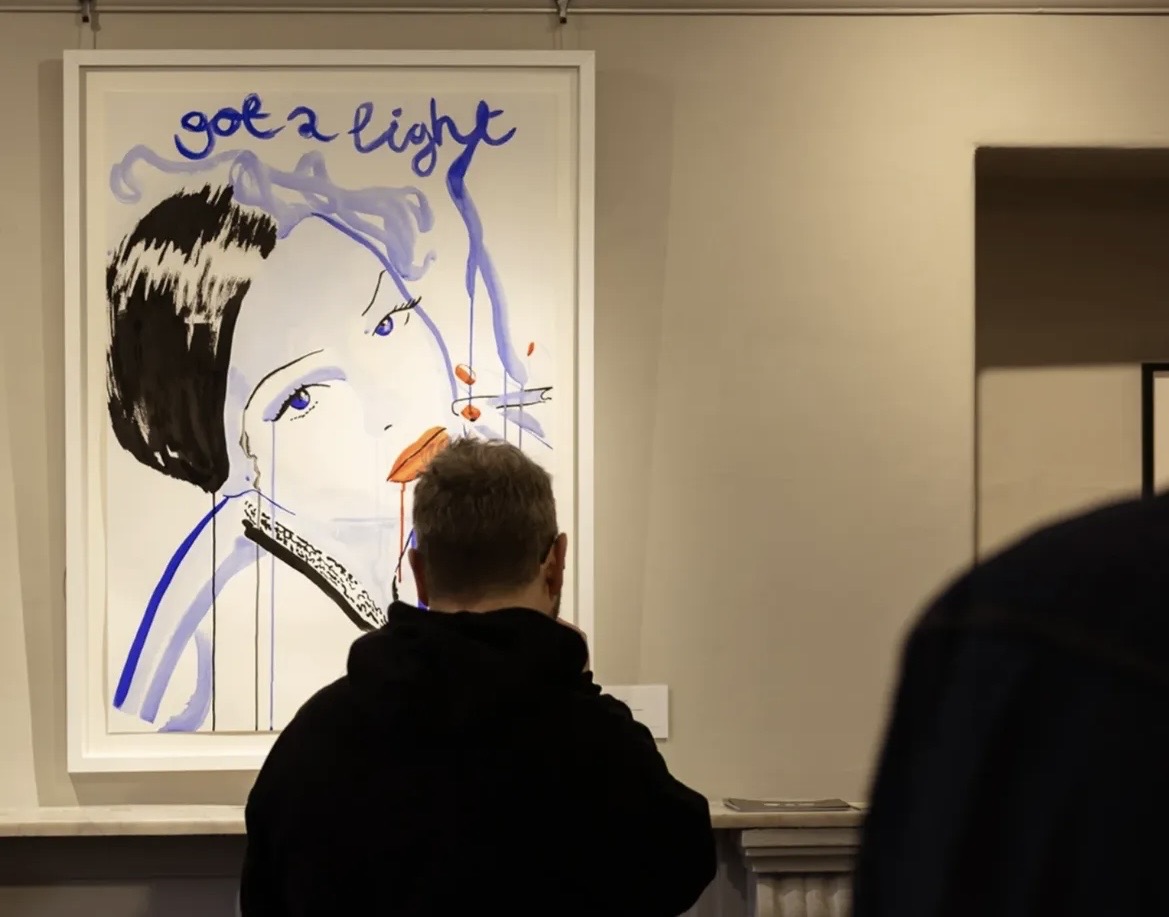
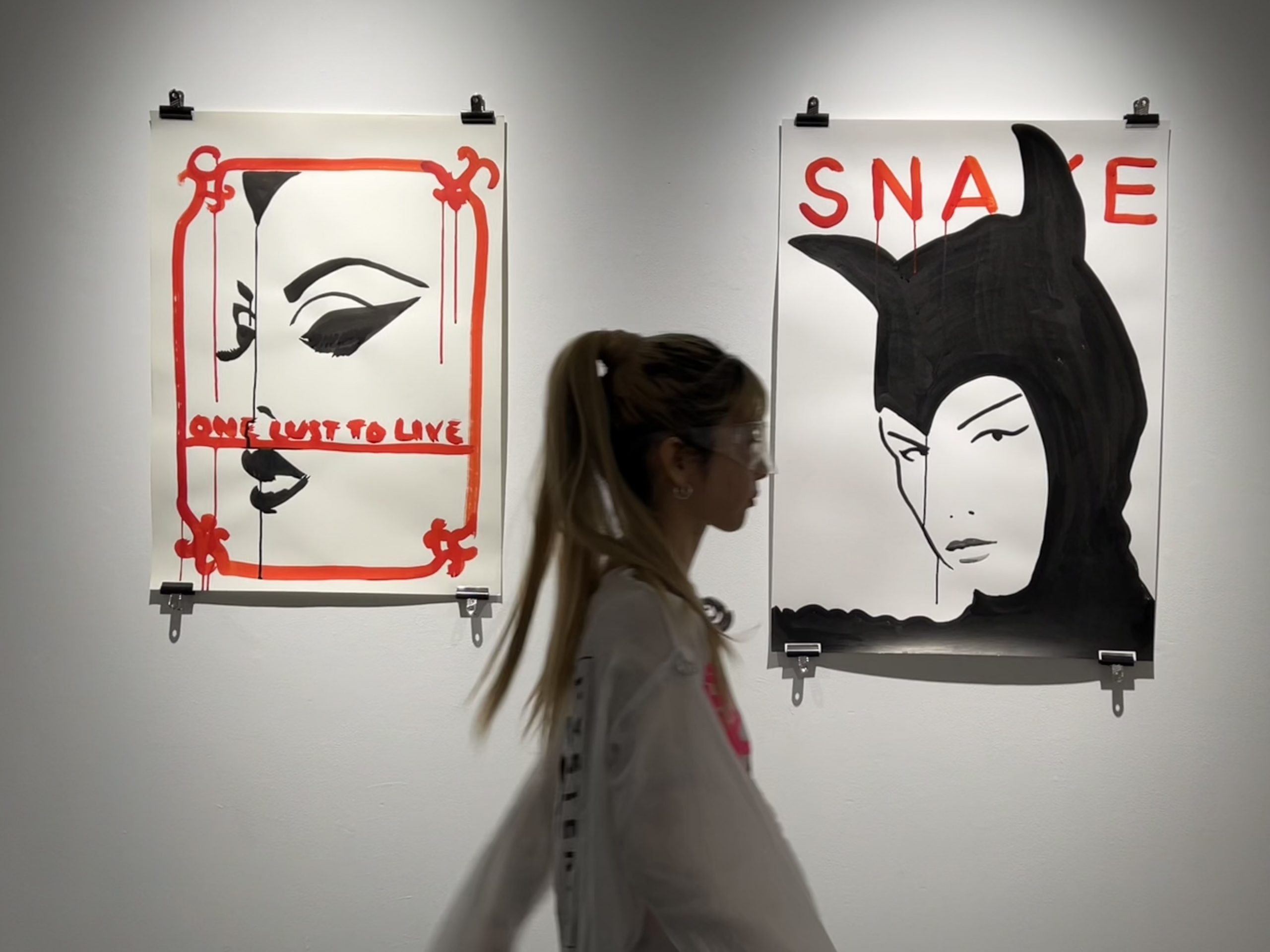
In terms of cognitive functioning, mainstream culture operates mainly from the limbic brain as we’re permanently in a state of fight or flight. Our pleasure receptors are constantly being stimulated by the connection provided by technological devices. We’re stuck in patterns that make connection impossible, whilst desiring connection above all things. My drawings reflect the world we live in, turned up to 11. They use material sourced from advertising, newspaper headlines, horror movies and smartphone selfies and revel in the insanity of our consensual reality. Philippa Snow called them ‘advertisements for sex and death as viewed through the glasses of They Live.’ She kind of nailed it.
What does a temple mean to you?
As Camille Paglia says, a temple is anywhere you kneel.
Do you have any spaces that act as your temple?
I believe that the art gallery is the modern-day temple. They are the only public space where hushed tones meet quiet contemplation.